
Global Eye Clinic
How Global Eye Clinic Owned the Holi Eye Safety Conversation Across India's Top Publications
Key Focus Areas:
A. Occasion-led Digital PR and earned media outreach
B. Expert thought leadership positioning
C. Seasonal health storytelling tied to Holi 2026
D. Multi-language media placements (English + Hindi + Marathi)
E. Multi-publication authority building across health and lifestyle verticals
Global Eye Clinic is a specialist ophthalmology practice dedicated to comprehensive eye care, corrective procedures, and preventive eye health education. With a team of experienced eye specialists, the clinic serves patients across multiple conditions, including refractive errors, retinal disorders, paediatric eye care, and ocular emergencies.
Beyond clinical practice, Global Eye Clinic has positioned itself as a credible public voice on eye health, a brand that educates as much as it treats. For a medical practice, that distinction matters enormously. In a market where trust is the primary purchase driver, building visibility through editorial credibility rather than advertising is the growth strategy.
The Challenge
Eye care is a high-trust, high-consideration category. Patients don't choose an ophthalmologist based on an Instagram ad. They rely on referrals, reputation, and the credibility signals that come from appearing in publications they already trust.
Despite having strong clinical expertise and genuine public health insight to offer, Global Eye Clinic faced a familiar challenge for specialist medical practices:
• Limited organic visibility outside its existing patient base
• No consistent earned media presence in national publications
• Underutilised doctor expertise that wasn't reaching audiences at scale
• No structured PR process to capitalise on seasonal moments when eye health becomes a national conversation
Core Problem:
Global Eye Clinic's clinical expertise existed, but it wasn't being heard where health decisions are actually shaped: in the publications, portals, and platforms that millions of Indians read every day.
The Holi 2026 season presented a time-sensitive opportunity. National health desks actively seek expert commentary during this window, but only brands that are already media-ready can capture it.
The objective was clear: position Global Eye Clinic's specialists as the authoritative voice on Holi eye safety, secure placements in Tier-1 national publications, and build a media foundation that compounds beyond the festival season.


Strategic Approach
pROwth deployed its Brand Spotlight methodology, a structured earned media programme combining occasion intelligence, message architecture, and targeted journalist outreach. The strategy was built around one insight: seasonal health moments create predictable editorial demand. Brands that show up with credible, ready-to-publish expert commentary win coverage that money cannot buy.
The campaign centred on three strategic pillars.
1. Occasion-Led Narrative Architecture
Rather than pitching the clinic generically, pROwth mapped Global Eye Clinic's expertise directly to the Holi 2026 editorial moment. Story angles were designed to answer the specific questions health journalists were already planning to cover: contact lens safety, chemical colour risks, post-celebration eye care, paediatric eye protection, and the myth vs. reality of herbal gulaal safety.
2. Expert Positioning as a Media Asset
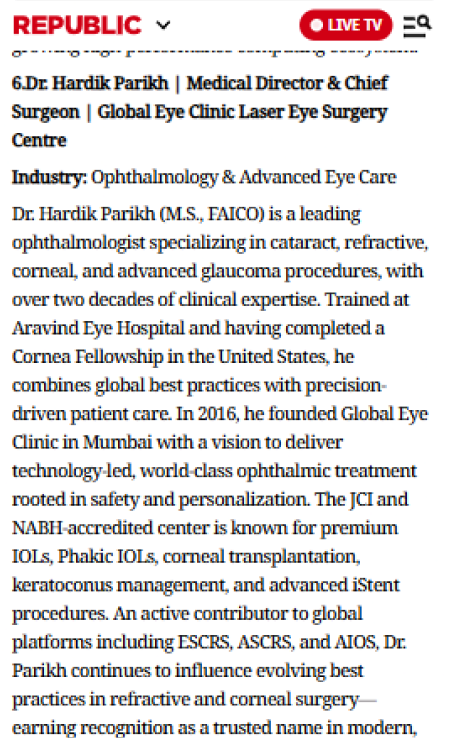
Global Eye Clinic's doctors were positioned not as practitioners promoting services, but as patient advocates and public educators. Pre-approved quotes, clinical data points, and first-person expert commentary were packaged into media-ready formats that reduced the editorial lift for journalists, making coverage faster and more likely.
3. Tiered Publication Targeting
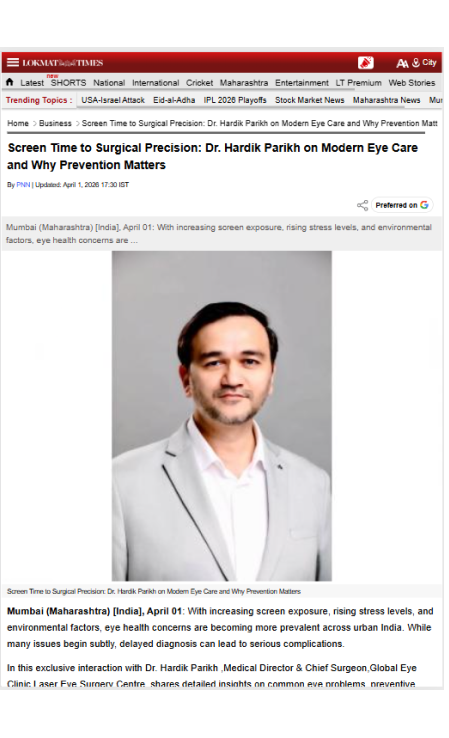
Outreach was structured across Tier-1 national media (Times of India, Hindustan Times, Business Standard), established digital health verticals (The Health Site, India TV News, News18), lifestyle publications (Her Zindagi, One India, Wion News), and Hindi & Marathi-language platforms, ensuring coverage reached both English and vernacular audiences across demographics.
Execution: Step By Step
1. Occasion Audit and Editorial Calendar Mapping:
pROwth conducted an audit of Holi-related health coverage from prior years, identifying the recurring story angles that national health desks return to each festival season. This formed the editorial blueprint for the campaign, ensuring every pitch matched existing journalist demand rather than trying to create it from scratch.
2. Message Architecture and Expert Brief:
Core messaging was defined across five story territories: pre-Holi prevention, contact lens safety, chemical colour risks, paediatric eye care, and post-Holi recovery. For each territory, pROwth developed a set of expert talking points, clinical facts, and quotable insights that could be adapted across publication types and tones.
3. Media List Build and Journalist Mapping:
A tiered outreach list was assembled targeting health, lifestyle, and parenting editors across Tier-1 and Tier-2 national publications, digital health platforms, and Hindi & Marathi-language portals. Each journalist was mapped to their recent beat coverage to ensure pitch relevance and improve response rates.
4. Content Production and Pitch Packaging:
pROwth produced media-ready pitch packages for each story angle, including expert commentary formatted for direct editorial use, supporting clinical context, and angle-specific hooks tailored to each publication's editorial voice. Content was structured for both traditional SERP performance and AI discoverability, with high factual density and clear attribution.
5. Phased Outreach Across the Holi Window:
Pitches were deployed in waves across the pre-Holi, Holi day, and post-Holi editorial windows, each wave addressing the audience's evolving information needs. Pre-Holi coverage focused on prevention; same-day coverage addressed real-time safety; post-Holi coverage captured recovery and follow-up care queries.
6. Coverage Monitoring and Amplification:
Every secured placement was tracked and catalogued by publication authority and audience reach. Placements were redistributed across Global Eye Clinic's owned channels to extend shelf life, reinforce editorial credibility with existing patients, and support search visibility through branded content signals.
Results and Impact
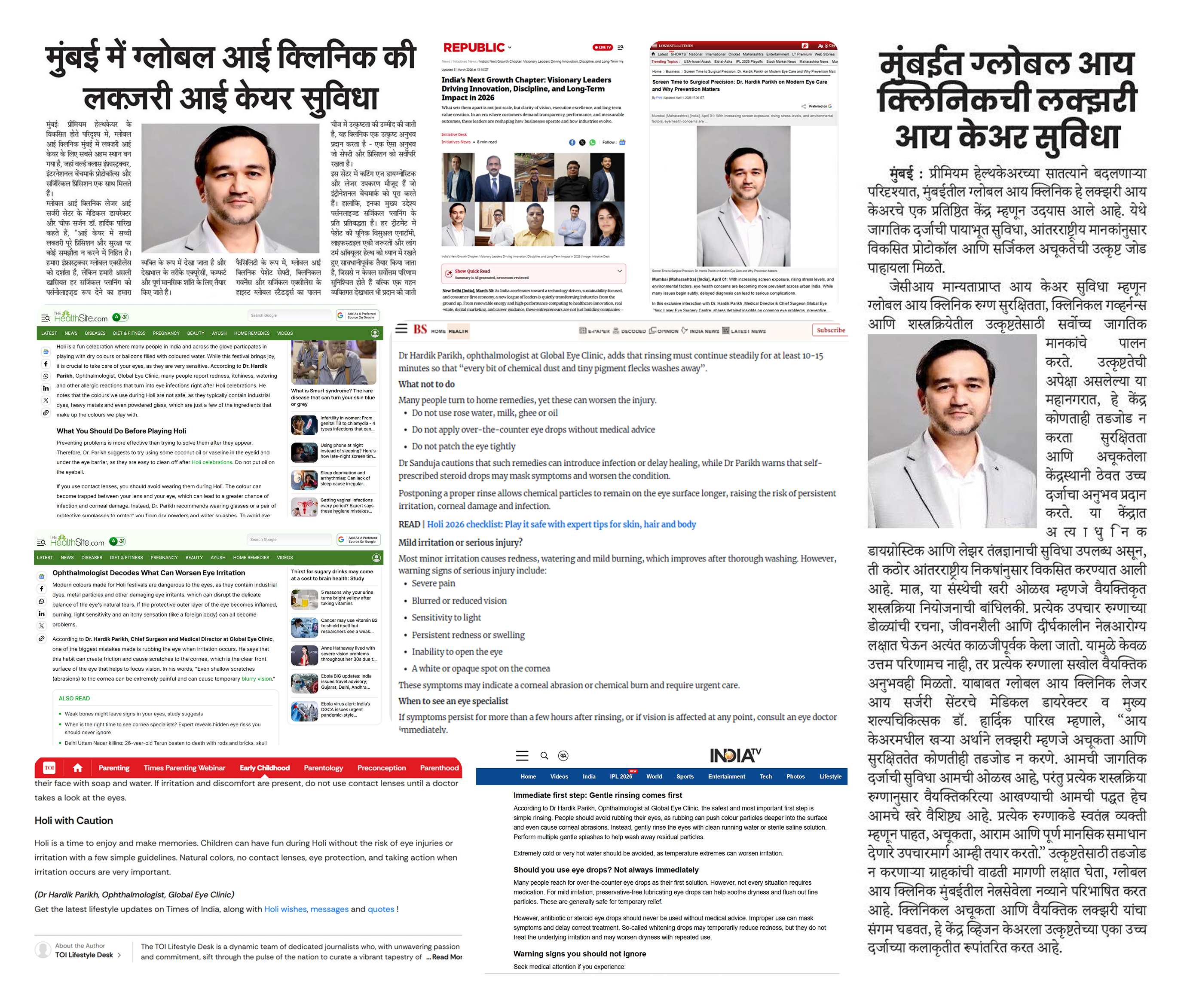
The March 2026 Holi campaign delivered 12 editorial placements across national Indian media within a single festival window: all through earned media.
1. 12 National Placements in 30 Days:
Coverage secured across India's most widely read health, lifestyle, and general news publications in a single campaign window.
2. Tier-1 Media Presence Established:
Global Eye Clinic's doctors were quoted in Times of India, Hindustan Times, Business Standard, and News18, publications that independently validate clinical credibility in a way no advertising spend can replicate.
3. Multi-Platform Audience Reach:
Placements spanned English, Hindi, and Marathi audiences, health-specific verticals and general lifestyle media, desktop and mobile-first publications, ensuring the brand's expert voice reached diverse patient demographics simultaneously.
4. Permanent Digital Footprint:
Unlike paid campaigns that disappear when the budget does, each editorial placement remains indexed, searchable, and attributable, continuing to build Global Eye Clinic's authority long after Holi 2026.
5. Seasonal Moment Fully Captured:
By deploying across pre-Holi, Holi-day, and post-Holi editorial cycles, the campaign followed the complete arc of patient concern, from prevention through recovery, rather than a single burst of coverage.
Key Takeaways
A. Seasonal health moments are PR leverage points. Festival seasons create predictable spikes in editorial demand for health expertise. Brands that arrive media-ready, with pre-packaged expert commentary, clinical data, and journalist-ready formats, consistently win coverage that reactive pitches miss entirely.
B. Medical expertise is an underused media asset. Clinical knowledge that lives inside a doctor's head or on a clinic website is invisible to the millions of patients who discover healthcare brands through editorial content. Structured PR programmes unlock that expertise and distribute it at scale.
C. Earned media validates premium positioning. For high-consideration healthcare decisions, a placement in Times of India or Hindustan Times communicates trust and authority in a way that paid advertising fundamentally cannot. Patients equate editorial coverage with third-party validation.
D. Digital PR compounds where paid media expires. Every earned media placement is permanently indexed, referenced, and discoverable through search and AI assistants. A campaign that delivers 12 placements in March continues generating visibility, trust, and inbound patient interest for months and years afterward.
FAQs
Q1: What PR strategy did pROwth use for Global Eye Clinic?
pROwth deployed its Brand Spotlight service, a structured earned media programme combining occasion-led story architecture, expert positioning, and tiered journalist outreach. The campaign was built around Holi 2026 as a high-demand editorial window, with story angles mapped to the specific questions health journalists were planning to cover.
Q2: How many media placements did the campaign secure?
The March 2026 Holi campaign secured 12 editorial placements across national Indian media within a single festival window. Publications included Times of India, Hindustan Times, Business Standard, News18, The Health Site, Wion News, India TV News, One India, and Her Zindagi, spanning Tier-1 national media, digital health verticals, and Hindi & Marathi-language lifestyle platforms.
Q3: Why is Digital PR particularly effective for healthcare and medical brands?
Healthcare is a high-trust category where editorial credibility directly influences patient decisions. A placement in a trusted national publication communicates clinical authority in a way that paid advertising cannot replicate. For specialist practices like ophthalmology, where patients are making decisions about their eyesight, appearing as an expert source in Times of India or Hindustan Times is a materially stronger trust signal than any sponsored content.
Q4: How does occasion-led PR differ from standard press release distribution?
Standard press releases push brand news outward and hope for pickup. Occasion-led PR works differently: it maps a brand's expertise to editorial demand that already exists, arriving with ready-to-use expert commentary at precisely the moment journalists need it. For Global Eye Clinic's Holi campaign, pROwth identified the specific story angles health desks were already planning and positioned the clinic's doctors as the credible source those stories required, a fundamentally different dynamic from broadcast PR.
Q5: Can a single Digital PR campaign have a long-term impact?
Yes. Every editorial placement secured through this campaign is permanently indexed across the web, discoverable through Google searches, cited by AI assistants, and accessible to any patient researching eye health. Unlike paid ads that expire the moment the budget does, earned media continues building authority and driving inbound interest indefinitely. The 12 placements from March 2026 will continue generating visibility for Global Eye Clinic long after the Holi season has passed.
Similar Case Studies


ModxComputers
https://modxcomputers.com/Creating Industry-Wide Recognition Through Strategic Digital PR With pROwth That Elevated ModxComputers' Founder, Category Leadership, and Innovation in India's Custom PC Ecosystem.


Bee Online
https://beeonline.co.in/Driving National Media Visibility Through Strategic Digital PR With pROwth That Positioned Bee Online as a Trusted Voice on ROI-Led Growth, AI Adoption, and Digital Marketing Innovation
Systango Technologies Limited
https://www.systango.com/Driving National Media Visibility Through Strategic Digital PR With pROwth That Highlighted Systango Technologies’ Expertise, Global Footprint, Innovation-Led Approach, Plus Strong Client-Centric Business Model.
Rosemoore
https://www.rosemoore.co.in/How pROwth’s Strategic Digital PR Helped Rosemoore Strengthen Brand Perception, Build Emotional Fragrance Storytelling, and Establish a Premium Wellness Identity Across the Indian Market While Staying True to Its British Legacy.