
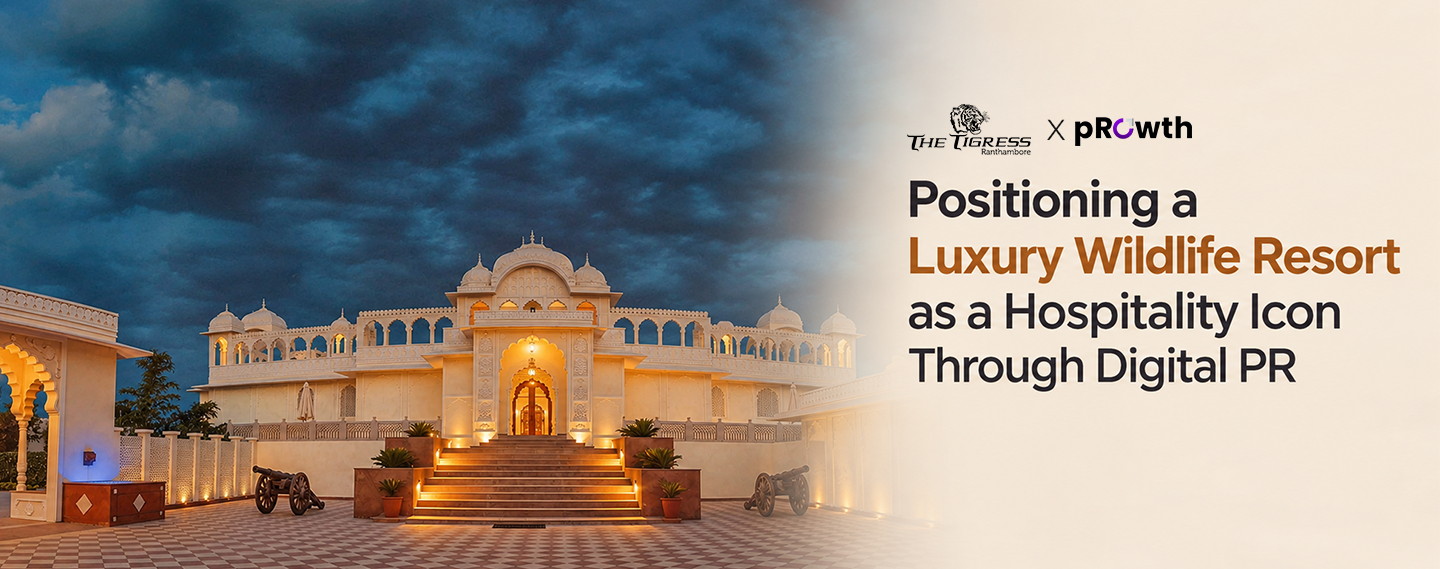
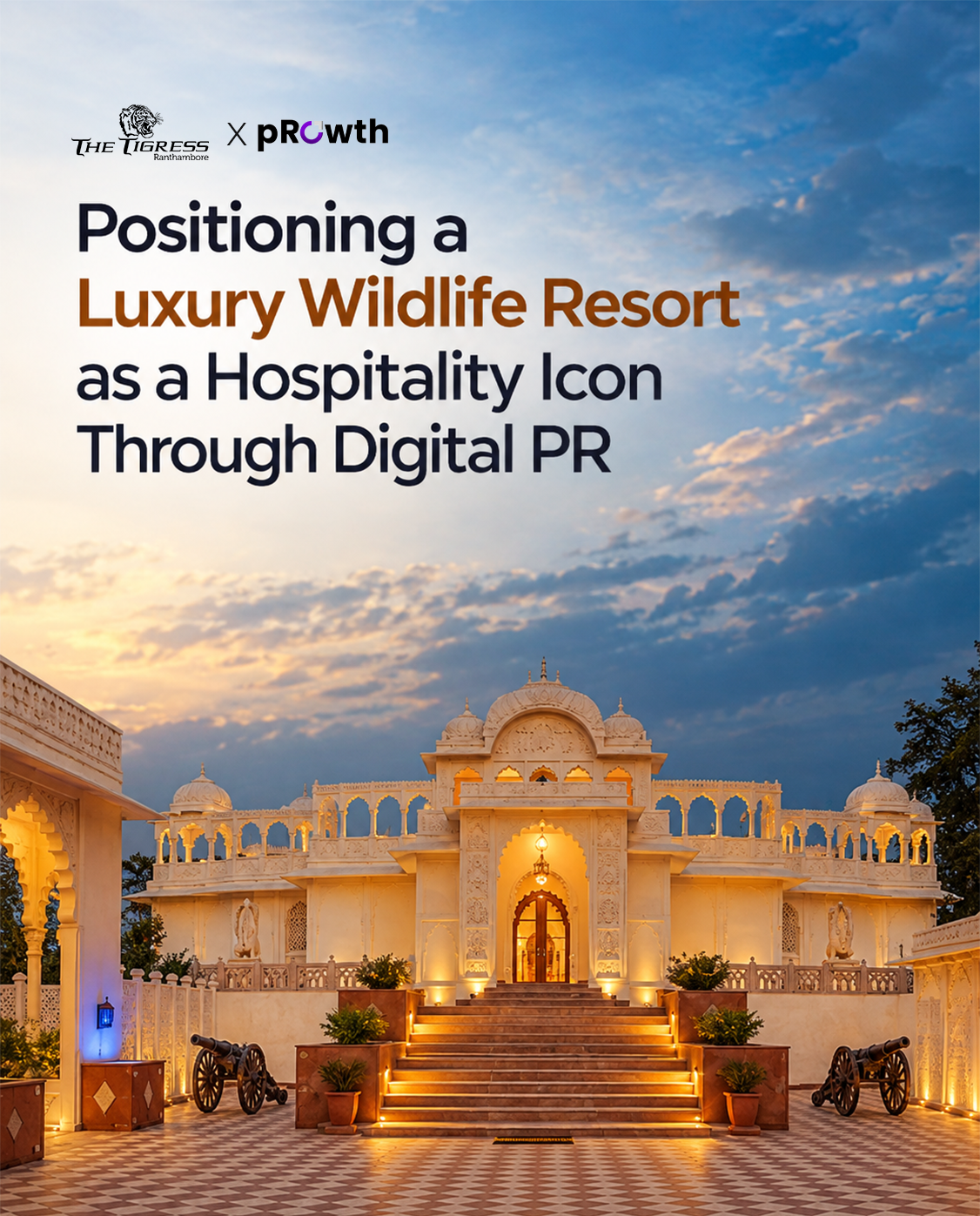
The Tigress Ranthambore
How Digital PR Positioned The Tigress Ranthambore as a Luxury Hospitality Icon
Key Focus Areas:
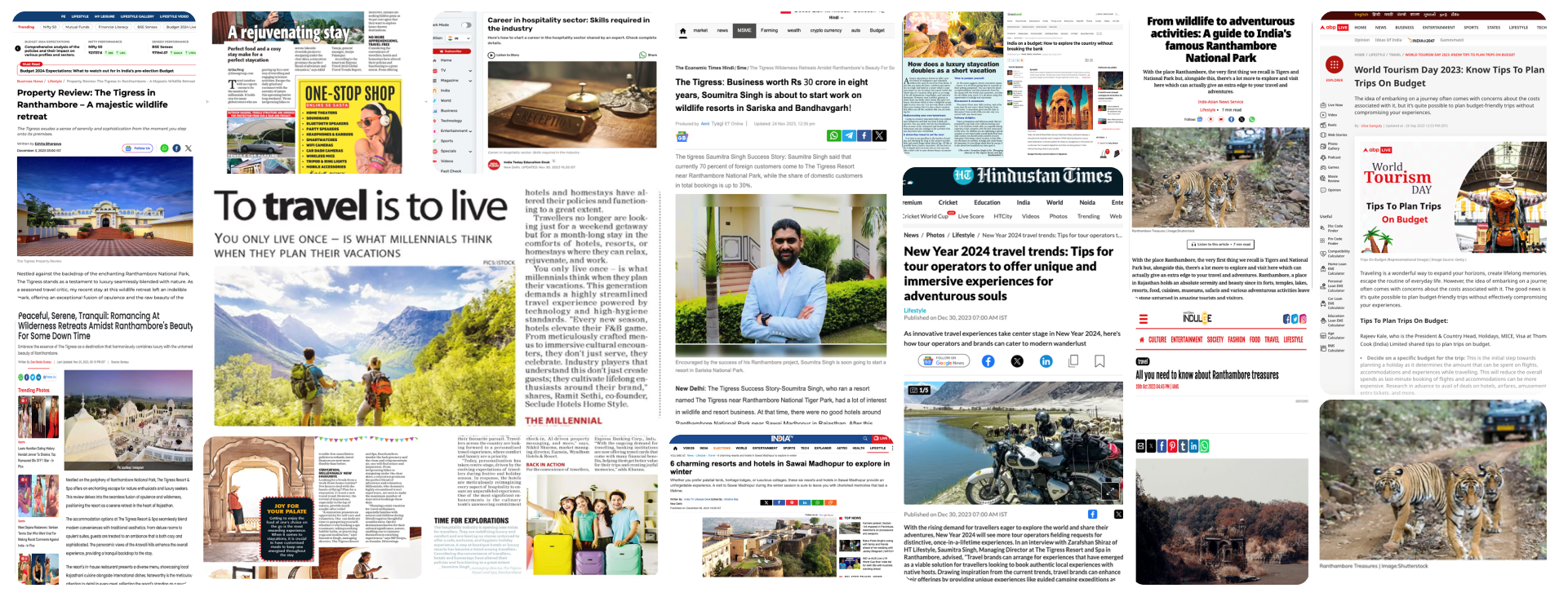
A. Digital PR and media outreach
B. Luxury travel storytelling
C. Destination branding and tourism narratives
D. Thought leadership in hospitality
E. Strategic media placements
Luxury hospitality brands often face a unique challenge. Even with a premium property and a strong guest experience, building visibility in a crowded travel market requires more than traditional marketing. The goal is authority, recognition, plus destination positioning.
This case study explores how strategic digital PR helped The Tigress Ranthambore strengthen its reputation as a luxury wildlife resort and elevate Sawai Madhopur as an experience-driven travel destination. The focus was not limited to brand promotion. Instead, the strategy combined storytelling, media outreach, thought leadership, and destination branding to position the resort within India’s luxury travel narrative.
The result was a powerful shift in visibility, credibility, and brand perception.
About The Tigress Ranthambore
The Tigress Ranthambore is a luxury heritage-style resort located near Ranthambore National Park in Sawai Madhopur, Rajasthan. The property blends royal architecture, modern hospitality, and proximity to one of India’s most famous wildlife destinations.
Ranthambore itself is one of the largest national parks in northern India and is globally known for tiger sightings and wildlife tourism.
The resort provides a range of premium experiences, including:
A. Heritage-inspired luxury suites and cottages
B. Curated dining experiences featuring Indian and international cuisines
C. Spa and wellness facilities
D. Destination weddings and events
E. Wildlife safari experiences and local cultural exploration
With wildlife tourism steadily growing in India, Ranthambore plays a major role in the country’s eco-tourism economy and local livelihoods.
Despite these advantages, the resort needed a stronger digital presence and brand recognition among luxury travelers, media publications, and industry stakeholders.
The Challenge
Before the campaign began, The Tigress Ranthambore faced several strategic challenges common in hospitality marketing.
A. Limited National Visibility
While the resort offered a premium experience, its digital presence did not fully reflect its positioning as a luxury destination.
B. Intense Competition
The Ranthambore hospitality market includes multiple luxury resorts competing for the same traveler segment. Standing out requires brand differentiation and storytelling.
C. Underleveraged Destination Narrative
Ranthambore has a powerful travel narrative built around wildlife, heritage, and conservation. However, many hospitality brands focus only on rooms and amenities rather than the broader destination experience.
D. Lack of Authority Signals
Luxury travelers often rely on editorial coverage, media mentions, and trusted publications when evaluating hospitality brands. The resort needed stronger credibility signals across the digital ecosystem.


Strategic Approach
The growth strategy focused on digital PR rather than conventional advertising. The objective was to build long-term authority rather than short-term traffic.
The campaign centered around four key pillars.
1. Strategic Media Outreach
The first step was identifying relevant media outlets across travel, lifestyle, hospitality, and business publications.
Stories were pitched around themes such as:
A. Luxury wildlife travel in India
B. Ranthambore’s growing tourism economy
C. Experiential hospitality near national parks
D. Heritage hospitality trends
This allowed the brand to appear in editorial conversations rather than promotional listings.
2. Destination Storytelling
Instead of focusing solely on the resort, the narrative positioned Sawai Madhopur and Ranthambore as an immersive travel destination.
Content emphasized:
A. Wildlife safari experiences
B. Cultural heritage of Rajasthan
C. Sustainable tourism narratives
D. Local ecosystem and conservation awareness
By aligning the resort with the broader destination, the brand gained relevance within travel media conversations.
3. Founder and Leadership Positioning
Thought leadership became another important pillar.
Leadership voices were positioned in discussions around:
A. The future of experiential travel
B. Luxury hospitality in wildlife destinations
C. Responsible tourism and conservation
This approach helped transform the brand from a hospitality property into a recognized voice in the travel ecosystem.
4. Authority-building digital coverage
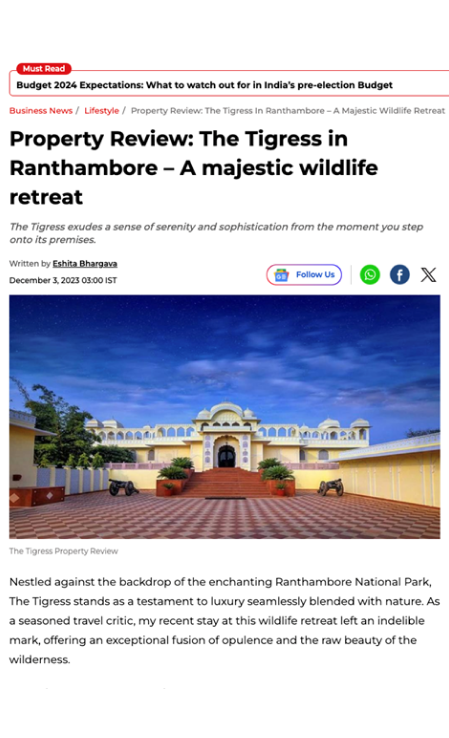
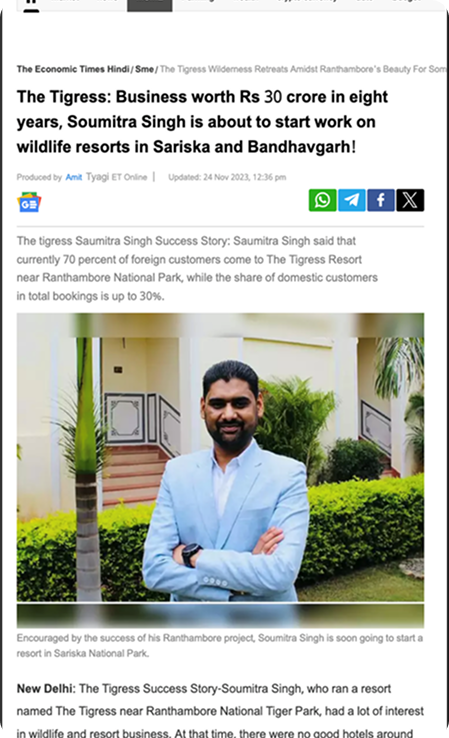
The campaign prioritized placements in credible publications that signal authority to both readers and search engines.
Editorial mentions, interviews, and feature stories were used to strengthen brand trust and visibility across the digital landscape.
Results and Impact
The digital PR strategy produced measurable improvements in brand visibility and authority.
A. Increased Media Visibility
The resort began appearing in multiple travel and lifestyle publications, strengthening its presence in the hospitality media landscape.
B. Stronger Brand Authority
Editorial coverage helped position The Tigress Ranthambore as a recognized luxury hospitality brand associated with wildlife tourism and experiential travel.
C. Destination Branding Impact
Media storytelling also helped reinforce Ranthambore’s reputation as a culturally rich and experience-driven travel destination.
This created a mutually reinforcing effect between the destination and the resort brand.
D. Higher Trust Among Travelers
Third-party media coverage often acts as a trust signal for potential guests. The increase in editorial mentions contributed to stronger credibility among luxury travelers.
E. Long-term Digital Footprint
Unlike paid ads that disappear after a campaign ends, digital PR creates permanent visibility across search engines and online publications.
This ensured that the brand continued benefiting from the campaign over time.
Key Takeaways for Hospitality Brands
This campaign highlights several lessons for hotels, resorts, and travel brands.
A. Storytelling is more powerful than promotion.
Travelers connect with experiences, destinations, and narratives. Brands that focus only on amenities often miss the opportunity to create a compelling story.
B. Media authority builds trust.
Coverage in credible publications can significantly improve brand perception and visibility.
C. Destination branding amplifies brand value.
Positioning a property within a larger destination narrative increases relevance and reach.
D. Digital PR creates long-term visibility.
Unlike short-term advertising campaigns, editorial coverage continues generating value long after publication.
FAQs
Q1. What was the main objective of the digital PR campaign for The Tigress Ranthambore?
The primary objective was to increase brand visibility and credibility in the luxury hospitality and wildlife tourism segment. The campaign aimed to position The Tigress Ranthambore as a premium resort near Ranthambore National Park while strengthening its presence across travel and lifestyle media platforms.
Q2. Why did The Tigress Ranthambore need a digital PR strategy?
Despite offering a premium hospitality experience, the resort had limited digital visibility in a highly competitive luxury travel market. A digital PR strategy helped improve media exposure, strengthen brand authority, and create trust signals through credible publications.
Q3. What role did pROwth play in the growth strategy?
pROwth acted as the digital PR and brand positioning partner. The team developed a strategic media outreach plan, created compelling travel narratives, and secured editorial coverage in relevant publications to enhance the brand’s authority and reach.
Q4. How does digital PR help hospitality brands grow?
Digital PR helps hospitality brands build credibility through editorial coverage rather than paid promotion. Media mentions, interviews, and feature stories improve brand authority, strengthen search visibility, and influence travelers who rely on trusted publications for travel decisions.
Q5. What strategies were used to promote The Tigress Ranthambore?
The campaign used multiple strategies, including digital PR outreach, destination storytelling, luxury travel narratives, and thought leadership positioning. These approaches helped the brand gain visibility across travel, lifestyle, and hospitality media.
Similar Case Studies


Global Eye Clinic
https://www.globaleyeclinic.com/Driving National Media Visibility Through Strategic Digital PR With pROwth That Positioned Global Eye Clinic as a Trusted Authority on Holi Eye Safety Across India's Leading Publications


ModxComputers
https://modxcomputers.com/Creating Industry-Wide Recognition Through Strategic Digital PR With pROwth That Elevated ModxComputers' Founder, Category Leadership, and Innovation in India's Custom PC Ecosystem.

Bee Online
https://beeonline.co.in/Driving National Media Visibility Through Strategic Digital PR With pROwth That Positioned Bee Online as a Trusted Voice on ROI-Led Growth, AI Adoption, and Digital Marketing Innovation
Systango Technologies Limited
https://www.systango.com/Driving National Media Visibility Through Strategic Digital PR With pROwth That Highlighted Systango Technologies’ Expertise, Global Footprint, Innovation-Led Approach, Plus Strong Client-Centric Business Model.